


1. Matte vs. Glossy Finishes
Matte finishes have a microscopic texture that diffuses light so that it is non-reflective. This finish is better at hiding scratches while being more durable and easier to maintain. In contrast, glossy finishes have a smooth surface that reflects light directly, creating a shiny look. The glossy surface shows more scratches but provides better aesthetics and depth of color.
Glossy Finish: Has high reflectivity and shine. Often used in applications that require a luxurious or high-end look.
Matte Finish: Does not reflect light and has no shine. Often used in applications that require a more understated or utilitarian look.
A comparison of the characteristics between matte and glossy finishes is listed in the table below.
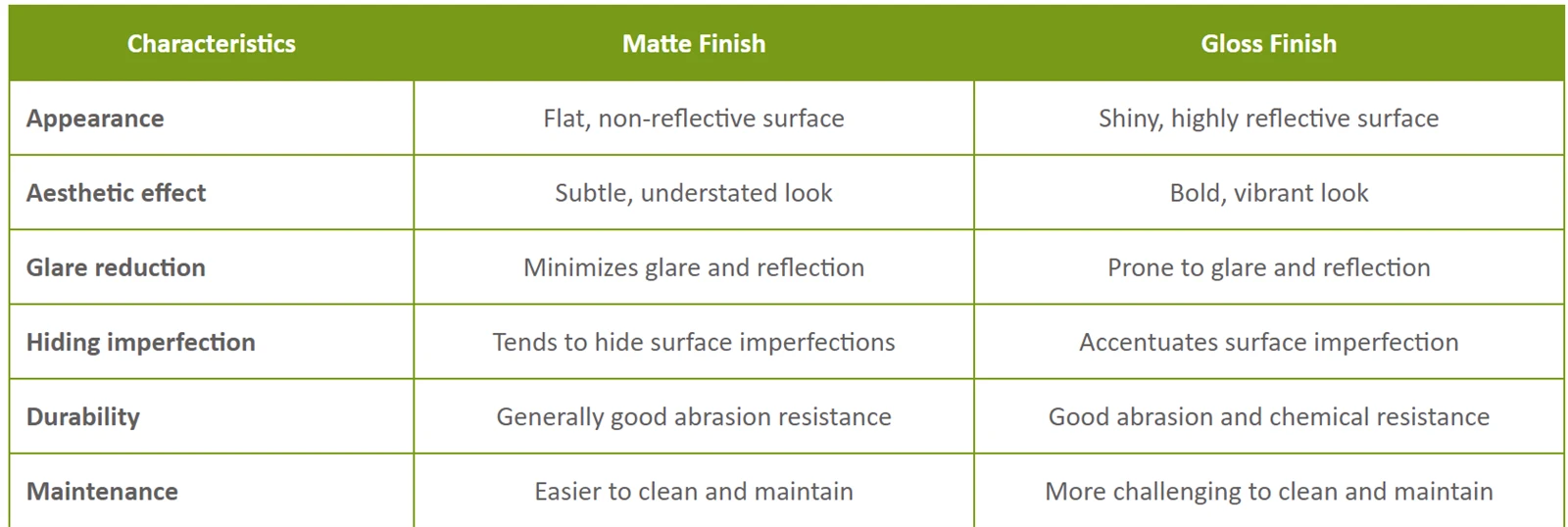
Figure 1 shows two identical parts that differ in their mechanical properties only in their surface treatment. The left image has a matte surface that reduces reflections compared to the right image, which shows a glossy surface. Matte surfaces are also somewhat rough. Therefore, the type of surface treatment can be selected based on the desired appearance of the prototype or series part.
Matte finish related features include: Matte appearance: It provides a matte, velvety surface finish. It is ideal for applications that require a smooth, matte appearance. Improved surface coating: It enables consistent and uniform surface coating. This is especially important for packaging materials and consumer products. Texture modification: It can change the feel of plastic products. It enhances grip and reduces slipperiness. Cost-effective: It allows surface modification without the need for additional processing steps.
2. Additives for matte effect
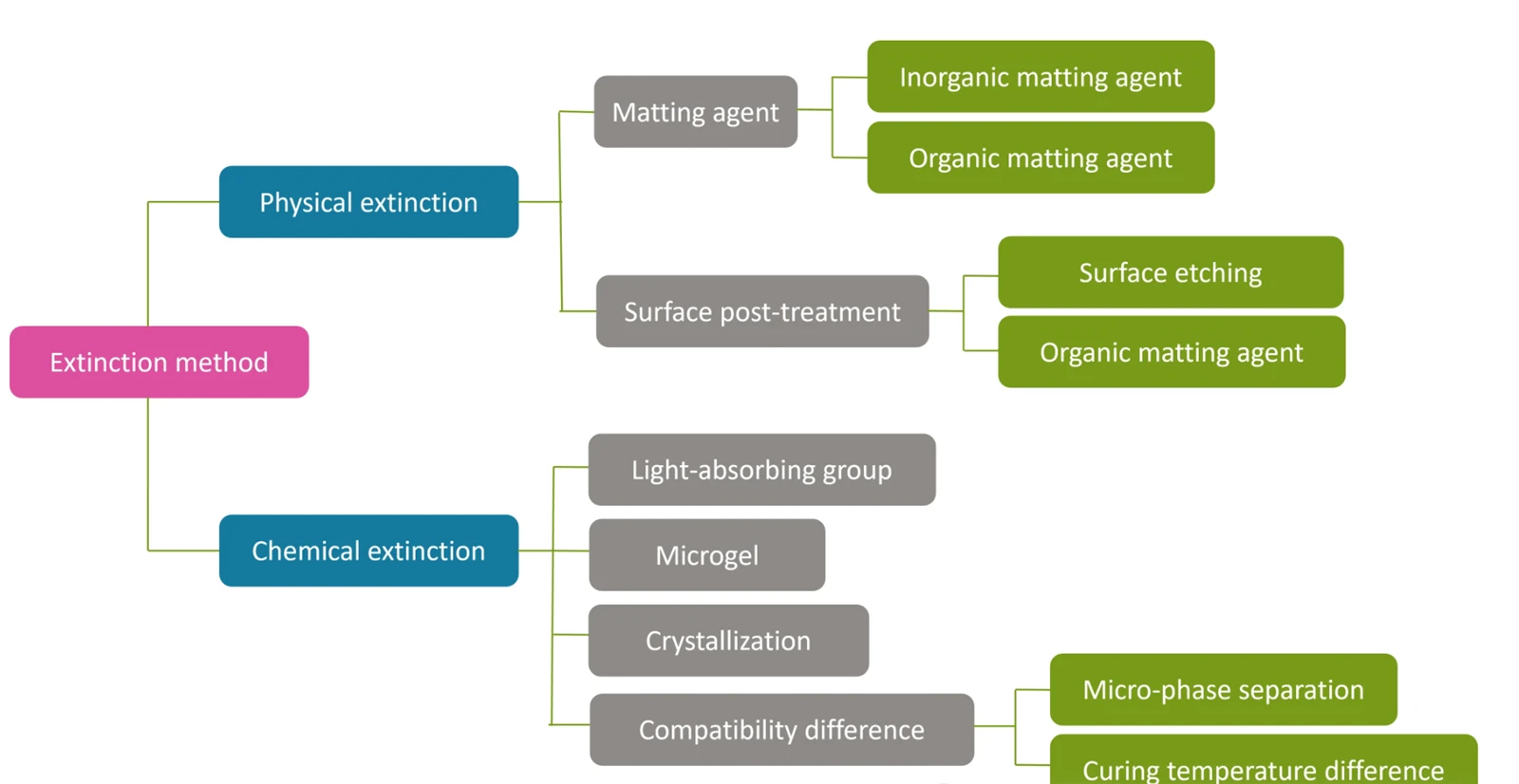
In order to achieve the desired matte effect in plastics, several polymer additives are used. They mainly perform surface modification by migrating to the surface during processing. They disrupt the smooth plastic surface and create diffuse reflections that appear matte to the eye.
1. Matting agent Matting agent is a polymer processing additive that is added to polymers to reduce their gloss and achieve a matte effect. These additives work by scattering light and preventing it from reflecting from the surface in a concentrated manner. Lowering the extrusion die temperature can provide a matte surface.
2. Plasticizer Plasticizer increases the flexibility and softness of the polymer. Some plasticizers can also affect gloss. Rapidly solvating plasticizers can lower process temperatures and reduce gloss. They offer a range of benefits, such as: Compatibility: Plasticizers compatible with PVC formulations help melt at lower temperatures, resulting in a matte finish. Suitable for plastisol applications and can be easily used in virtually any polymer system requiring increased flexibility and softness. Dibutyl phthalate (DBP), butyl benzyl phthalate (BBP), and benzoate plasticizers are notable examples of rapidly solvating plasticizers. Nitrile rubber is a classic example of a solid plasticizer, often referred to as a "toughener" or "plasticizer." It is often used in combination with liquid plasticizers to enhance the flexibility and softness of polymers. However, when combined with liquid plasticizers, nitrile rubber can absorb liquid and coagulate during high-speed mixing. To prevent this, it is recommended to add nitrile rubber to a cooler mixer at a temperature of approximately 80°C, rather than a hot mixer. Nitrile rubber is often supplemented in powder form in grades Chemigum® P35 or Chemigum® P83. It not only improves the surface finish, making it matte, but also enhances the compression set, comparable to that of thermoplastic elastomers (TPE).
3. Minerals Minerals, such as aluminum oxide and magnesium oxide, can also be used as matting agents. They are often used in high-performance applications where durability and scratch resistance are important. Functional fillers such as diatomaceous earth, kaolin, synthetic silica, and titanium dioxide can be used as matting agents. Matt finish depends mainly on coating thickness and filler loading level. In addition to filler loading level, gloss is also strongly affected by the following factors: particle shape, particle size, and particle size distribution
4. Waxes Waxes, such as polyethylene waxes and paraffin waxes, are effective matting agents. They are often used in combination with silica to provide a more durable surface finish. Waxes are incorporated into plastics in different forms, such as: micronized, micronized, dispersions. Oxidized high molecular weight PE waxes help create a matte look. These low molecular weight PE waxes, such as LDPE and HDPE forms. Partially oxidized LDPE and oxidized HDPE variants are particularly effective. Oxidized HDPE waxes promote melting while reducing gloss.
5. Acrylic Matting Agents They have distinct advantages over inorganic gloss control agents. They are non-abrasive and extend the life of processing equipment. This makes them the first choice for applications where equipment life is critical. Cross-linked Acrylate Terpolymers: Commonly known as SUNIGUM®, it is a versatile additive that can enhance engineering thermoplastics and thermoplastic elastomers. Compatible with polar polymers such as PVC, SUNIGUM® imparts softness, matte effects, and improves weather resistance, heat resistance, UV radiation resistance, chemical resistance, oil resistance, and fuel resistance. Acrylic Heteropolymers: PARALOID™ KF-710 is an acrylic heteropolymer that effectively reduces the gloss of plasticized PVC compounds. When added at 2.5phr, KF-710 can reduce the 60° gloss from 42% to 16%, and further to 10% at 5phr. This performance exceeds that of silicone, which only reduces gloss to 23% at 2.5phr and has no further improvement at 5phr5.
3. Factors affecting the matte effect of plastics
4. Conclusion
Achieving matte finish in polymers is a multifaceted process that combines the use of specific matte additives and processing techniques. This surface treatment enhances the aesthetic appeal of the product by providing a non-reflective surface. In addition, it offers benefits such as increased durability and ease of maintenance. These benefits have led to an increase in the demand for matte finished polymers in several industries such as automotive, consumer goods, packaging, electronics, etc.
Shenzhen Youyang Technology Co., Ltd. has recently developed the latest matte resin, which has a fast curing speed and strong scratch resistance. Customers are welcome to consult