


As the global chemical industry's demand for environmental protection and efficient production increases, Electron Beam Curing (EB) is becoming a core technology in the fields of coatings, inks, adhesives, etc. As a key component of this technology, Electron Beam Curing Additives (EB) promote the green transformation of the industry by optimizing material properties and curing efficiency. The AM-321 product launched by Shenzhen U-Sunny is a representative of innovation in this field.
1. Principle and advantages of electron beam curing technology
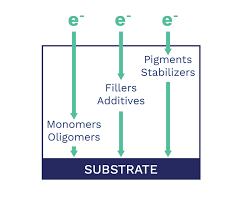
Electron beam curing uses high-energy electron beams to penetrate materials, trigger free radical polymerization or cross-linking reactions, and achieve instant curing. Compared with traditional thermal curing or ultraviolet (UV) curing, it does not require photoinitiators, avoiding odor or toxicity problems caused by residual small molecules. In addition, EB technology has the following advantages:
Environmental protection: Almost no volatile organic compounds (VOCs) are produced, which complies with strict environmental protection standards such as EU REACH;
High efficiency: The curing speed can reach 900 meters/minute, and it can penetrate thick coatings or high pigment systems of more than 200 microns;
Superior performance: The cured product has a high cross-linking density, and its scratch resistance and chemical corrosion resistance are significantly better than traditional methods.
2. Application of Electron Beam Curing Additives in Chemical Industry
1. Coating Industry
EB-curing coatings are widely used in the automotive, furniture and construction fields. For example, the EB-curing decorative coating developed in Japan is anti-fouling, weather-resistant and formaldehyde-free, and is suitable for interior and exterior wall finishes. Shenzhen U-Sunny's AM-321 acrylate monomer (TPGDA) can improve the gloss and adhesion of coatings with its low viscosity and high reactivity.
2. Ink and Printing
EB-curing inks are in great demand in the fields of food packaging and pharmaceutical labels. Since no photoinitiator is required, its safety is FDA-certified, and it is particularly suitable for printed products that come into direct contact with food. The balanced performance of AM-321 (such as flexibility and economy) makes it an ideal choice for curing thick ink layers in gravure printing.
3. Adhesives and Composite Materials
EB technology can cure adhesives on heat-sensitive substrates (such as plastic films) to avoid high-temperature deformation. The high cross-linking density design of AM-321 enhances the aging resistance of the adhesive layer, and is suitable for high-precision scenarios such as electronic component packaging.
3. The core competitiveness of Shenzhen U-Sunny AM-321 products
AM-321 is a multifunctional acrylate monomer designed for EB/UV curing systems, with the following technical highlights:
Low volatility and low odor: meet the hygiene standards of cosmetics and food-grade applications;
Fast curing and high adhesion: adapt to high-speed production lines and improve production efficiency;
Wide compatibility: suitable for epoxy resin, polyurethane acrylate and other systems.
U-Sunny helps customers achieve technological breakthroughs in 3C electronics, new energy vehicles and other fields through customized formulation services and sales networks in more than 20 countries around the world.
Electron beam curing additives are reshaping the manufacturing paradigm of the chemical industry. Shenzhen U-Sunny's AM-321 has become a strategic choice for companies to achieve high-efficiency and low-carbon transformation with its excellent performance and environmental protection characteristics. In the future, with policy support and technological iteration, EB technology will occupy a more important position in the global Industrial 4.0 wave.