


As the global manufacturing industry's demand for efficient and environmentally friendly production increases, photocuring technology has become a core process in the fields of coatings, inks, 3D printing, etc. due to its fast curing, low energy consumption and low pollution characteristics. In this technology, photoinitiators are the key components that trigger polymerization reactions, and their cost and performance directly affect the breadth of commercial applications. In recent years, sulfur-based photoinitiators have become a popular choice to replace traditional high-priced photoinitiators due to their low cost, low toxicity and high reaction efficiency. This article will explore in depth the economic advantages, technological breakthroughs and future potential of sulfur-based photoinitiators to provide comprehensive insights for the industry.
1. Cost-effectiveness analysis of sulfur-based photoinitiators
Compared with traditional photoinitiators (such as benzoin and thioxanthone), sulfur-based photoinitiators show significant cost advantages in the following aspects:
Low raw material cost: Sulfur is abundant and cheap, and its compound synthesis path is simple, which greatly reduces the cost of raw materials and production.
Low toxicity reduces environmental protection costs: Traditional photoinitiators may release toxic byproducts (such as benzene derivatives), while sulfur-based photoinitiators reduce the release of harmful substances through molecular structure optimization, meet the increasingly stringent environmental protection regulations, and thus reduce the cost of pollution control for enterprises.
Energy efficiency improvement: Sulfur-based compounds have a wide absorption range in the ultraviolet-visible light region and can match a variety of wavelength light sources (such as LEDs), reduce energy waste, and further compress the overall production cost.
For example, a study compared the cost-effectiveness of sulfur-based photoinitiators with traditional materials and found that their unit curing cost was reduced by about 30%, while the curing efficiency was increased by 15%.
2. Technological innovation of sulfur-based photoinitiators
To balance cost and performance, sulfur-based photoinitiators have achieved technological breakthroughs in the following directions:
1. Molecular structure optimization
By introducing functional groups such as thioethers and thioesters, researchers have developed sulfur-based compounds with higher photosensitivity. For example, photoinitiators containing sulfur heterocyclic structures can significantly improve the efficiency of free radical generation and shorten the curing time.
2. Enhanced wavelength adaptability
For different application scenarios (such as UV-LED curing), the absorption spectrum of sulfur-based photoinitiators can be adjusted to specific wavelengths (such as 365nm or 405nm) through chemical modification to avoid light source energy waste and improve curing uniformity.
3. Multifunctional design
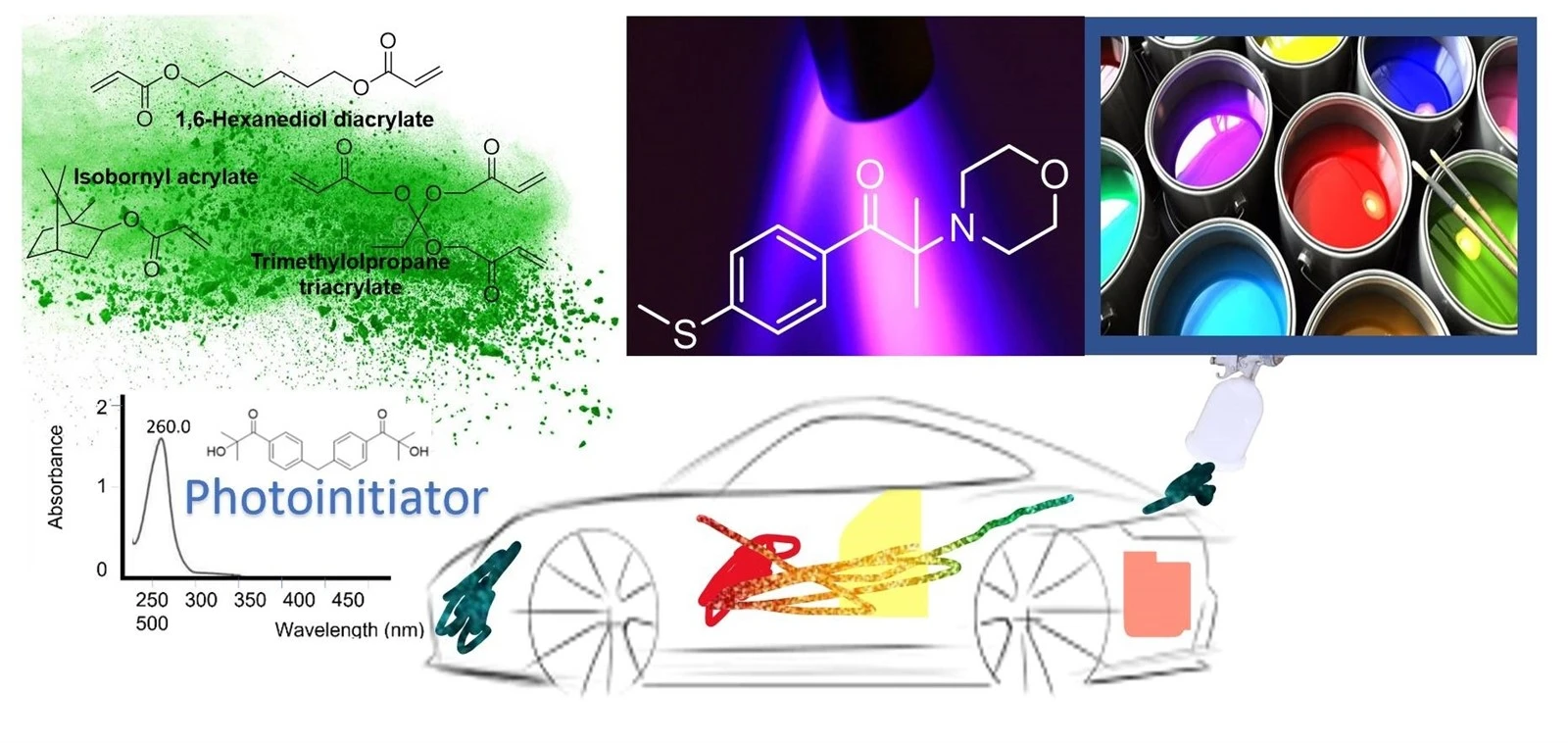
Some sulfur-based photoinitiators have both antioxidant or high temperature resistance properties, which are suitable for packaging materials in extreme environments (such as automotive coatings or electronic component packaging), extending product life and reducing maintenance costs
3. Application scenarios and market potential
Sulfur-based photoinitiators have demonstrated commercial value in many fields:
Industrial coatings: fast-curing coatings for furniture and metal surfaces, reducing production energy consumption and VOC emissions.
3D printing: supports high-precision photocuring resin molding, saving more than 20% of material costs compared to traditional initiators.
Electronic packaging: In LED packaging, sulfur-based photoinitiators can improve the light transmittance and weather resistance of silicone, while reducing the total cost of packaging materials.
According to industry forecasts, by 2030, the global photoinitiator market size will exceed US$5 billion, of which sulfur-based photoinitiators are expected to grow to more than 25% of the market share due to cost advantages. Especially in the Asia-Pacific region, driven by manufacturing upgrades and environmental protection policies, sulfur-based technology will accelerate the replacement of traditional solutions.
4. Challenges and future trends
Despite the significant advantages of sulfur-based photoinitiators, the following issues still need to be addressed:
Long-term stability: Some sulfur-based compounds are easily oxidized or decomposed, and storage stability needs to be improved through coating technology or additives.
Regulatory compliance: Its biodegradability and long-term environmental safety need to be further verified to meet the requirements of EU REACH and other regulations.
Future development directions include:
Biological sulfur compounds: Synthesize photoinitiators using renewable resources (such as plant-derived sulfur) to promote a circular economy.
Intelligent production: Combine AI algorithms to optimize the synthesis path and achieve low-cost large-scale production.
Sulfur-based photoinitiators are becoming the key driving force for innovation in photocuring technology due to their economic and environmental performance. With the continuous iteration of technology and policy support, their application scope will be further expanded, providing sustainable solutions for reducing costs and increasing efficiency in the manufacturing industry. Enterprises need to pay attention to technological trends and seize opportunities in emerging markets.