


Core characteristics of PAS 33: precise light response and efficient curing
PAS 33 is a deep-curing anthraquinone derivative designed for cationic light-curing systems. Its main absorption wavelength peak is at 410nm and can be continuously extended to 470nm. This wide spectrum response capability enables it to effectively capture UV light energy, accelerate photoinitiated reactions, and significantly increase the curing rate. According to technical parameters, the curing efficiency of PAS 33 is comparable to that of free radical systems, and it also exhibits better penetration in thick film applications, solving the pain point of energy attenuation of traditional photosensitizers in deep curing.
In terms of physical properties, PAS 33 has a polymer solid content of 100%, a density of 1.02g/cm³, a viscosity of 150cPa.s at 25°C, and a Gardner color of only 5, indicating that it has the characteristics of low chromatic interference and high stability. These characteristics enable it to maintain excellent compatibility in colored systems, avoiding the influence of coating color or transparency due to the introduction of additives.
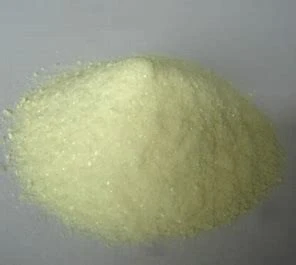
Application advantages of deep-layer curing anthraquinone derivatives
In thick film curing scenarios, the deep-layer curing ability of PAS 33 is particularly outstanding. Due to the limited light absorption range of traditional photosensitizers, it is difficult for energy to penetrate high-thickness coatings, resulting in uneven curing or over-curing of the surface layer. PAS 33, with its wide wavelength response extending to 470nm, can ensure that the ultraviolet light energy is evenly distributed inside the coating, achieving synchronous curing from the surface to the bottom layer. This feature gives it an irreplaceable advantage in the fields of electronic packaging materials, high-thickness UV adhesives and industrial protective coatings.
In addition, PAS 33 also performs well in cationic colored systems. Cationic curing itself has the advantages of low shrinkage and high adhesion, but traditional sensitizers often interact with pigments, resulting in reduced curing efficiency. By optimizing the molecular structure, PAS 33 is compatible with a variety of pigment systems while maintaining high reactivity, providing a reliable solution for the rapid curing of colored coatings.
Technological breakthrough: double improvement in cost-effectiveness and environmental protection
Compared with traditional photosensitizers, deep-curing anthraquinone derivative PAS 33 achieves a balance between cost and performance. Its 100% solid content design reduces the need for solvent addition, which not only reduces volatile organic compound (VOC) emissions, but also simplifies the production process. At the same time, high photosensitivity efficiency means that the expected curing effect can be achieved per unit dosage, further reducing the overall cost.
It is worth mentioning that the wide wavelength adaptability of PAS 33 enables it to adapt to a variety of UV light sources, including medium-pressure mercury lamps and LED light sources. This flexibility provides users with more equipment selection space, especially for production line upgrade scenarios that require compatibility with multi-wavelength curing equipment.
Industry prospects and potential value
With the continuous improvement of industrial manufacturing requirements for coating performance, photocuring technology is evolving towards high efficiency, environmental protection and multifunctionality. As an anthraquinone derivative that takes into account deep curing ability and wide spectrum response, PAS 33 provides a new technical path for high-thickness materials, complex structural parts and color coatings. In the future, its application potential in emerging fields such as 3D printing, flexible electronics and new energy equipment protection is worth looking forward to.
Conclusion
PAS 33 photosensitizer is based on deep-curing anthraquinone derivatives. Through precise photoresponse design and optimized physical properties, it breaks through the limitations of traditional photocuring technology. Whether it is thick film penetration, color system compatibility, or environmental protection and economy, it shows significant advantages. For companies pursuing efficient production and high-quality coatings, PAS 33 is undoubtedly a cutting-edge material solution worthy of attention.