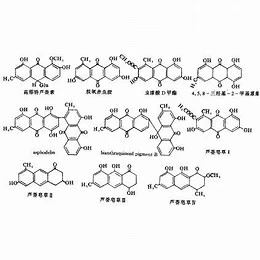
In the field of photocuring technology, cationic curing systems have attracted much attention due to their excellent deep curing ability and adaptability to colored systems. However, traditional cationic systems often face challenges such as insufficient curing rate and poor compatibility with color pastes. The birth of PAS 33 photosensitizer provides a new solution for this field. As a high-efficiency additive designed based on anthraquinone derivatives, PAS 33 has become a benchmark product among cationic colored system curing additives due to its unique light absorption characteristics and chemical stability.
Technical characteristics: Precisely matching light curing needs
The core advantage of PAS 33 comes from its scientifically designed molecular structure and performance parameters. Based on 100% polymer solid content, the product exhibits excellent physical properties:
- Absorption wavelength: The main absorption peak is located at 410nm, which can be effectively extended to 470nm, covering the visible light region, significantly improving the utilization rate of light energy;
- Viscosity and density: The viscosity is only 150cPa·s at 25℃, and the density is 1.02g/cm³, ensuring high compatibility with the resin system;
- Color stability: Gardner chromaticity 5, suitable for color-sensitive dark or colored systems.
These characteristics enable it to respond quickly to light source excitation and maintain stable performance in complex formulas, especially suitable for application scenarios that require both curing efficiency and color uniformity.
Application scenarios: Solving the problem of curing colored systems
1. Efficient curing of cationic colored systems
In traditional cationic curing, the addition of color paste or pigment often leads to light shielding effect, affecting the deep curing effect. As a curing aid designed for cationic colored systems, PAS 33 significantly improves the efficiency of photoinitiation by broadening the absorption spectrum range. Its anthraquinone derivative structure can effectively capture long-wavelength light energy, penetrate the color layer and activate the cationic initiator, thereby achieving a curing rate comparable to that of the free radical system.
2. Thick film and deep layer curing
For systems with a coating thickness of more than 100μm, the photosensitivity of PAS 33 can ensure uniform energy transfer to the bottom layer. Experiments show that in thick film applications, the curing reaction initiated by it can avoid the problems of excessive cross-linking on the surface and uncured bottom layer, significantly improving the mechanical properties and durability of the product.
Core advantages: Technological breakthroughs drive efficiency upgrades
1. Cost-effectiveness and wide applicability
Compared with similar products, PAS 33 reduces the cost of use while ensuring performance. Its excellent compatibility enables it to adapt to a variety of cationic resin systems such as epoxy and vinyl ether, and can be directly applied without complex formula adjustments.
2. Accurate wavelength response
The absorption range of 410-470nm covers the emission wavelengths of most LED light sources (such as 405nm, 450nm), making it particularly outstanding in UV-LED curing equipment. This feature not only improves energy efficiency, but also reduces equipment upgrade costs.
3. Environmental protection and safety
As a solvent-free solid additive, PAS 33 avoids the release of volatile organic compounds (VOCs), which is in line with the trend of green manufacturing.
Conclusion: Redefining the boundaries of cationic curing technology
Today, as photocuring technology continues to evolve, PAS 33 photosensitizer is reshaping industry standards with its unique value as a curing aid for cationic colored systems. Whether it is solving the curing bottleneck of dark coatings or breaking through the technical barriers of thick film applications, its scientifically designed performance parameters and wide applicability provide downstream users with efficient and economical solutions. In the future, with the popularization of UV-LED technology and the improvement of environmental protection requirements, PAS 33 is expected to release greater potential in the fields of electronic packaging, automotive coatings, 3D printing, etc., and promote photocuring technology to a new level.