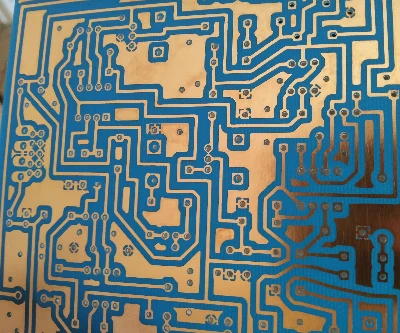
As a core material in electronic manufacturing, the performance of photoresist ink directly determines the precision, reliability and environmental friendliness of circuit boards. With the popularization of 5G, flexible electronics and Mini LED technologies, traditional photoresist inks face severe challenges in developing accuracy, chemical resistance and environmental compliance. The T-7111 developing anti-corrosion UV resin launched by Shenzhen U-Sunny redefines the performance boundaries of photoresist inks with innovative technology, providing high value-added solutions for the ink, adhesive and pressure-sensitive adhesive industries.
1. Technical Challenges of Photoresist Ink and Breakthrough of T-7111
Photoresist ink needs to maintain development stability in micron-level line width processing, while withstanding high-temperature welding (280°C) and acid-base etching environments. Traditional products often face three major bottlenecks:
Insufficient development accuracy: When the line width is greater than 4mil, bridging or disconnection is likely to occur, affecting the yield;
Weather resistance defects: Insulation resistance decreases in high temperature and high humidity environments, resulting in circuit short circuits;
Environmental compliance risks: Solvent-based systems contain VOCs, which are difficult to meet RoHS and REACH regulations.
T-7111 UV developing anti-corrosion resin achieves technological breakthroughs through molecular structure innovation:
Nano-level developing accuracy: branched acrylate design reduces the developing line width to 2mil, supports secondary developing process, and adapts to the needs of Mini LED and flexible circuit boards;
Triple weathering protection: the introduction of N-phenylmaleimide rigid chain segment, heat resistance up to 280℃/30min without yellowing, insulation resistance>1.0E+16Ω at 90%/85℃ humidity;
All-water-based formula: water replaces organic solvents, VOCs emissions approach zero, and passes FDA food contact grade and halogen content detection (<900ppm).
2. Application performance of T-7111 in multiple scenarios
1. PCB solder mask ink
Water-based UV curing system: with triglycidyl isocyanurate-itaconic acid modified resin, 10μm fine line printing is achieved, and the soldering temperature resistance is >260℃;
Low dielectric constant characteristics: dielectric constant (Dk) <3.0, adapted to the signal transmission requirements of 5G high-frequency circuit boards.
2. Touch screen photoresist
High light transmittance and insulation balance: light transmittance >98%, heat-resistant light transmittance >97%, meeting the micron-level processing requirements of the "bridge insulation layer" of the OGS process;
Integrated screen printing process: replaces traditional spin-coated photoresist, material utilization is increased by 80%, and the film thickness is only 2-3μm.
3. Functional adhesives and pressure-sensitive adhesives
Optically clear adhesive (OCA): 92% transmittance after curing, yellowing resistance index ΔYI<1.5, used for flexible screen bonding;
High temperature resistant pressure-sensitive adhesive tape: acrylic pressure-sensitive adhesive with T-7111 added, with a viscosity retention rate of >90% in the range of -20℃~120℃.
三,T-7111 Technical Parameters
|
Tg(℃) |
65 |
|
MW(GPC) |
5500 |
|
Elongation at Break% |
45 |
|
Colour, Gardner |
3 |
|
Acid value,mg KOH/g |
max. 90 |
|
Viscosity at 60℃,mPa.s |
45000 |
|
Specific Gravity |
1.12 |
|
Effective content |
100% |
4. Shenzhen U-Sunny: Driving green manufacturing with technological innovation
As a leader in the field of photocurable materials, Shenzhen U-Sunny relies on the core technology of T-7111 to provide full-link support:
Customized development: adjust the resin acid value (50-55 mgKOH/g) and flexibility (elongation at break 150-200%) according to the customer's substrate (PP/PC/PET);
Global compliance guarantee: Pass RoHS, REACH, FDA certification, support export to the EU and North American markets;
Process adaptation service: Provide full process optimization from nitrogen protection curing (adapted to Kyocera UV-LED light source) to developer formula.
5. Future Trends: Cross-border Integration of Photoresist Ink
With the miniaturization of electronic devices and the improvement of environmental protection requirements, the application scenarios of T-7111 will continue to expand:
Flexible electronics: As an insulating protective layer for foldable screens, the bending life is >100,000 times;
Biomedical: Develop water-based antibacterial photoresist glue for medical device packaging, passing ISO 10993 biocompatibility test;
Green packaging: Combine bio-based monomers to create degradable UV inks, reducing carbon footprint by 40%.
Conclusion
Shenzhen U-Sunny T-7111 developing anti-corrosion UV resin reshapes the industry standard of photoresist ink with three core advantages: nano-level precision, military-grade weather resistance and zero VOC emissions. Whether it is high-density PCB manufacturing, touch screen "bridge" insulation, or environmentally friendly adhesive development, T-7111 provides customers with sustainable high-performance solutions.
>> Contact the technical team now to get customized formulas and free samples!