


In the fields of medical devices, automobile manufacturing and electronic packaging, high-strength and reliable bonding of glass and metal is a long-standing technical pain point. Traditional epoxy or silicone adhesives face limitations such as slow curing, poor weather resistance, and easy yellowing, while UV curing adhesives are becoming the industry's preferred solution due to their second-level curing, environmentally friendly solvent-free and excellent chemical resistance.
1. Core Challenges of Glass-Metal Bonding
The failure of glass-metal bonding is mainly caused by three major contradictions:
Difference in thermal expansion coefficient: glass (~9×10⁻⁶/K) and stainless steel (~18×10⁻⁶/K) deform asynchronously when heated, which can easily lead to interfacial stress cracking.
Difference in surface energy: The surface energy of metal (500-5000 mN/m) is much higher than that of glass (~250 mN/m), and it is difficult for ordinary adhesives to wet the two substrates simultaneously.
Chemical stability requirements: Medical and automotive parts need to withstand corrosion from alcohol, disinfectants, fuel, etc., and conventional adhesives are prone to swelling and falling off.
2. UV curing technology: an innovative path for high-reliability bonding
Ultraviolet light curing adhesives achieve molecular-level bonding through free radical polymerization reactions. Its advantages are:
Fast production line adaptation: curing is completed within 3-10 seconds, and production efficiency is increased by more than 50%
Zero solvent emissions: 100% solid content complies with EU REACH regulations
Bond strength upgrade: hydrogen bonds and chemical covalent bonds are formed with the substrate, and the peel strength is >8 N/mm
3. T-7128 resin: molecular design breakthrough for high-performance bonding
T-7128 bifunctional polyurethane acrylate resin developed by Shenzhen U-Sunny is specially designed for glass-metal bonding. Its core technical features include:
Low acid value (≤3 mgKOH/g): avoids corrosion of metal substrates and prolongs device life
High functional group density: contains hydroxyl and carboxyl active groups, forming a strong hydrogen bond network with glass silanol
Toughness-rigidity balance: molecular weight 1100, glass transition temperature (Tg) 15℃, effectively absorbs thermal stress
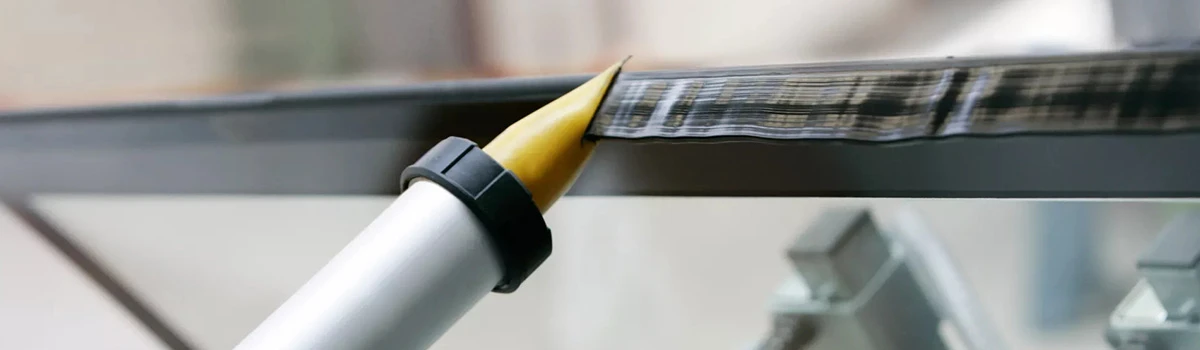
4.. Application scenarios and process adaptation guide
1. Medical device sealing
Requirements: Sterile environment, alcohol scrubbing resistance, biocompatibility
Solution: T-7128 combined with HEMAP phosphate additive (addition amount 0.5%), to achieve Class 100 cleanliness requirements in 304 stainless steel-glass syringe bonding
2. Automotive electronic packaging
Requirements: Anti-vibration and impact resistance, high temperature resistance in the engine compartment
Process: Apply T-7128 primer before vacuum coating to improve the adhesion between ITO glass and aluminum alloy frame (Baige Test 5B)
3. Consumer electronics optical components
Challenge: The light transmittance of the camera module glass lens and the magnesium alloy shell needs to be greater than 90%
Innovation: Add 15% IBOA monomer to reduce the viscosity to 1200 mPa·s, and achieve ultra-thin layer (<10μm) bubble-free filling.
5. Future Trends: Green and Smart Tracks in Parallel
Development of Water-Based UV Resins: Reduce VOC Emissions and Meet Environmental Protection Standards for Automotive Interiors (such as Toyota TSM0500G)
UV-LED Low-Energy Curing: Adapt to Portable Devices and Reduce Energy Consumption by 60% (such as the Application of T-7118 Resin in 3D Printing Coatings)
Nano-Enhanced Technology: Adding Silica Nanoparticles (Particle Size 30nm) to Increase Thermal Stability to 200℃
Conclusion
Glass-metal bonding has moved from "experienced processes" to "molecular design", with the core being material innovation and process synergy. T-7128 resin achieves reliable bonding in medical devices, automotive electronics and other fields through low acid value, high polarity functional groups and tough segment design. With the popularization of UV-LED curing and water-based technologies, glass-metal components will release greater potential in the fields of aerospace and flexible wearables.