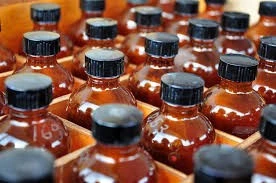
As the world's requirements for food and beverage packaging safety, environmental protection and aesthetics increase, UV stable resin has become a key material in the chemical industry. This type of resin is quickly cured by ultraviolet light, which not only greatly improves production efficiency, but also becomes a green solution to replace traditional petroleum-based coatings due to its solvent-free and low VOC (volatile organic compound) characteristics. In the field of beverage packaging, UV resin is widely used in metal cans, plastic bottles, label printing and anti-counterfeiting labels, significantly extending the shelf life of products and reducing carbon footprint.
Core technical advantages of UV-stabilized resins
1. Fast curing and efficient production
UV resins can be cured within seconds under ultraviolet light, which is more than 80% more efficient than traditional thermal curing processes. For example, Sanben New Materials' UV resins are used in the printing coating of beverage cans such as Wanglaoji and Jiaduobao, allowing the production line speed to reach 1,200 cans per minute while reducing energy consumption by 30%. This feature is particularly suitable for the beverage industry's demand for large-scale, high-tempo production.
2. Excellent physical and chemical properties
High hardness and wear resistance: Epoxy Acrylate resin can reach a hardness of 6H (pencil hardness) after curing, which can effectively resist scratches and wear during transportation.
Chemical resistance: Polyurethane Acrylate has excellent corrosion resistance to acidic beverages (such as juice and carbonated beverages), preventing the coating from falling off or deteriorating.
Low shrinkage and adhesion: The shrinkage rate of UV resin during curing is less than 2%, ensuring that the coating fits tightly with substrates such as metal and PET, preventing oxygen penetration, and extending the shelf life of beverages.
3. Environmental protection and safety
UV resin does not contain organic solvents and complies with EU REACH and US FDA food contact material standards. For example, water-based UV resin has close to zero VOC emissions during the curing process and is suitable for the inner wall coating of food-grade packaging. In addition, its non-toxic properties can avoid beverage contamination and protect consumer health.
Innovative application scenarios in beverage packaging
1. Metal can printing and coating
UV resins are widely used for outer printing and inner protective coating of beverage cans. Through gravure printing technology, UV ink can form high-gloss patterns on metal surfaces, and through cationic curing technology, it can achieve high-temperature sterilization resistance (121°C/15 minutes), which is suitable for dairy products and functional beverage packaging.
2. Plastic bottle anti-counterfeiting and labeling
UV inkjet printers use low-viscosity resins to print invisible anti-counterfeiting codes and production batch information on PET bottles, which can only be read by specific equipment. This technology helps beverage companies achieve full traceability and reduce the flow of counterfeit products into the market.
3. Recyclable packaging solutions
PET bottle labels using UV curable resins can be easily separated during the recycling process, avoiding pollution caused by traditional adhesives. For example, the label of a certain brand of mineral water bottle uses photo-imaging alkali-soluble resin, which can be removed by alkaline water treatment, improving recycling efficiency.
Industry trends: intelligence and sustainable development
1. 3D printing and customized packaging
UV-cured 3D printing technology is gradually being applied to the design of beverage bottle caps and special-shaped packaging. For example, by building the structure layer by layer through photocuring resin, lightweight and high-precision bottle cap shape can be achieved while reducing material waste.
2. Smart response coating
The "dynamic barrier" technology under development is combined with oxygen-sensitive materials to enable the UV resin coating to automatically adjust the oxygen barrier performance according to the ambient humidity or temperature. This smart packaging can further extend the shelf life of sensitive beverages such as freshly squeezed juice.
3. Circular economy drives innovation
Chemical companies are developing degradable UV resins, such as bio-based formulas based on polyester acrylate, whose degradation cycle can be controlled within 12 months, suitable for disposable beverage cups and straws.
UV-stabilized resins are reshaping the beverage packaging industry with their high efficiency, environmental friendliness, and multifunctionality. As global demand for sustainable packaging grows (the market size is expected to reach $24 billion in 2025), chemical companies need to continue to optimize resin performance and explore integration with renewable energy sources (such as solar curing systems)36. In the future, UV resins will not only promote the innovation of packaging technology, but will also become a key contributor to achieving carbon neutrality goals.