


Fast Curing LED Long Wave Initiator
Long-wave initiators are generally composite initiators of diacylphosphine oxide compounds, which have both surface drying and deep curing. They can also be fully cured under black and high pigment content formulas and LED light sources. It has both low yellowing and low migration, and no benzene release. More suitable for applications such as printing inks with higher environmental requirements.
LED long-wave initiators are highly specific to LED light sources of specific wavelengths. They are often designed to absorb light within a specific wavelength range of the LED light source to achieve precise photochemical control. LED long-wavelength initiators generally have efficient light absorption and photoinitiation properties, so they are able to initiate photochemical reactions at lower light intensities.
LED long-wave initiators are widely used in photocurable resins, such as 3D printing resins. The use of LED light sources enables rapid curing, reduces energy consumption, and increases printing speed. In the field of image processing and printing, these initiators are used as light-sensitive dyes and can be used to produce light-sensitive papers and films for recording or printing images.
|
Type |
Viscosity Cps (at 25℃) |
Absorption wavelength nm |
Form of supply |
Molecular weight g/mol |
|
Uyracure-500 |
320 |
395 |
Light yellow liquid |
220 |
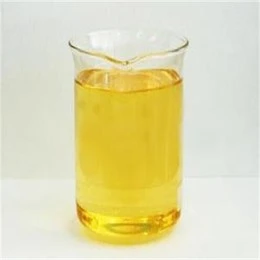
Uyracure-500
F&Q
F: What other features does the product have?
Q: The product has outstanding photoinitiation activity, storage stability and low toxicity. It has large absorption in visible light and can be completely cured on high thickness films. In acrylic systems, the photoinitiation efficiency of this product at 0.2% is 2-6 times higher than that of other products at 2%.


