


Deep Curing LED Long Wave Initiator
Long-wave initiators are generally composite initiators of diacylphosphine oxide compounds, which have both surface drying and deep curing. They can also be fully cured under black and high pigment content formulas and LED light sources. It has both low yellowing and low migration, and no benzene release. More suitable for applications such as printing inks with higher environmental requirements.
LED long-wave initiators can be used in a variety of photochemical reactions, such as photocuring, drug synthesis, polymer reactions, organic synthesis, etc. The use of LED long-wave initiators can reduce energy consumption. They typically require no additional chemical initiators, reducing the production of chemical waste.
Products can be used to prepare optical coatings, including optical filters, lens coatings and anti-reflective coatings. In cell biology and medical research, products are used as fluorescent labels to help visualize and track biomolecules and cellular structures.
|
Type |
Viscosity Cps (at 25℃) |
Absorption wavelength nm |
Form of supply |
Molecular weight g/mol |
|
Uyracure-504 |
180 |
405 |
Light yellow liquid |
202 |
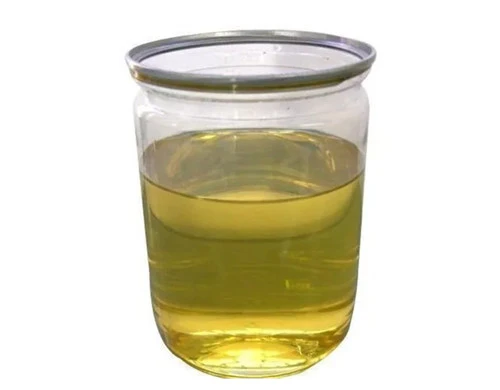
Uyracure-504
We understand that packaging is critical to the protection and safe delivery of your products. To meet your needs, we offer a wide variety of styles. This allows you to choose the right packaging based on project size and shipping requirements.
F&Q
F: What are the characteristics of this product compared to other products?
Q: The characteristic of our products is that they have long wavelengths. Common photoinitiators have small wavelengths of UV light, so transparent coatings with small layer thicknesses can be cured by UV. In the case of strongly pigmented or thicker coatings, curing with UV light is incomplete. This product can be cured at long wavelengths with high efficiency and savings.


