


In the industrial fields of coatings, inks, adhesives, etc., hydroxyl polyol compounds have become key components in the development of high-performance materials due to their unique molecular structure and reactivity. The multiple hydroxyl functional groups in their molecules not only give the materials excellent cross-linking ability, but also can achieve functional customization through chemical modification. This article will analyze the technical characteristics and multi-scenario applications of hydroxyl polyols, and focus on the synergistic effect of U-Sunny PAS-12 photosensitizer in photocuring systems.
1. Technical characteristics of hydroxyl polyol compounds
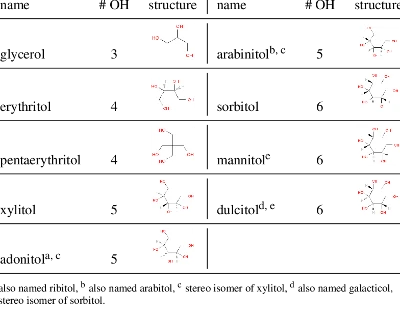
Hydroxy polyols are a class of organic compounds containing multiple hydroxyl groups (-OH). Their molecular structure can adjust the flexibility, weather resistance and reaction efficiency of materials through the number of functional groups, chain length and branching degree. For example:
Polyurethane synthesis: As the main reactant of isocyanate, hydroxyl polyols can control the hardness and elasticity of polyurethane by adjusting the hydroxyl content (hydroxyl value). Polyols with long-chain aliphatic structures can improve the low-temperature resistance of coatings (still maintain flexibility at -40°C), while high-branching polyols can enhance the cross-linking density of adhesives.
Environmental compatibility: Water-based hydroxyl polyols replace traditional solvent-based systems through emulsification technology, which can reduce VOC emissions by more than 80%, in line with EU REACH environmental standards.
2. Multi-field application scenarios
1. High-performance coatings and coatings
Hydroxy polyols play a core role in polyurethane coatings. For example, automotive clearcoats can improve weather resistance to 3000 hours of QUV aging test without powdering by introducing fluorinated modified polyols. In addition, in 3D printing photocurable coatings, copolymerization of hydroxyl polyols and acrylate monomers can achieve high-precision molding with a shrinkage rate of less than 1%, which is suitable for electronic packaging and optical devices.
2. Functional inks and printed electronics
In the field of conductive inks, hydroxyl polyols are combined with nanosilver wires (diameter 20nm) to enhance the interfacial bonding force through hydroxyl-metal coordination, making the ink resistivity as low as 5×10⁻⁵ Ω·cm. At the same time, its photocuring properties can be adapted to 405nm LED light sources to achieve rapid curing within 10 seconds, meeting the needs of flexible circuit printing.
3. Adhesives and composite materials
Hydroxy polyols achieve reversible bonding in polyurethane adhesives through dynamic bonding technology. For example, polyol systems containing dynamic acetal bonds can be quickly debonded in an acidic environment with pH=2 for electronic component recycling. In addition, carbon fiber-reinforced polyol-based composites have a temperature resistance of up to 180°C and a tensile strength of 118 MPa, and the cost is 70% lower than that of metal solutions.
3. U-Sunny PAS-12 photosensitizer: the efficiency engine of the photocuring system
Among photocuring materials, U-Sunny PAS-12 photosensitizer promotes industry upgrades through the following technological innovations:
Broad-spectrum and high-efficiency initiation: Optimized for 365-405nm UV LEDs, the photosensitivity efficiency is 40% higher than that of traditional iodonium salts, shortening the curing time to within 3 seconds, while reducing the residual unreacted monomers and reducing the risk of yellowing.
High temperature resistance and stability: Heat resistance up to 200℃, compatible with epoxy resin and polyurethane systems, suitable for automotive engine compartment coatings and high-temperature electronic packaging.
Environmental compatibility: It does not contain halogens and heavy metals, has passed RoHS certification, and can be used in conjunction with hydroxyl polyols to develop food-grade packaging inks and medical adhesives.
4. Future Trends and Challenges
With the rise of bio-based materials, the combination of renewable hydroxyl polyols such as castor oil derivatives and photocuring technology has become a hot topic. For example, castor oil-based polyurethane combined with PAS-12 sensitizer can achieve the recycling of photocurable materials and convert them back into liquid resin after degradation. However, how to balance cost and performance and improve the efficiency of light-material synergy is still the focus of industry breakthroughs.
Conclusion
Hydroxy polyol compounds are reshaping the industrial material landscape through molecular design and functional composites. The application of innovative materials such as U-Sunny PAS-12 provides efficient and environmentally friendly solutions for the coatings, inks and adhesives industries. In the future, with the deep integration of smart materials and green manufacturing, this technology will release greater potential in new energy, biomedicine and other fields.