


In the coating, ink, adhesive and other industries, Deep-Section Adhesive Curing has become a core process of modern manufacturing due to its high efficiency and reliability. This technology optimizes the curing reaction to achieve synchronous hardening of the material's interior and surface, and is particularly suitable for complex application scenarios of thick coatings, sealants and structural adhesives.
In the coating, ink, adhesive and other industries, Deep-Section Adhesive Curing has become a core process of modern manufacturing due to its high efficiency and reliability. This technology optimizes the curing reaction to achieve synchronous hardening of the material's interior and surface, and is particularly suitable for complex application scenarios of thick coatings, sealants and structural adhesives.
Technical principles and core advantages
Deep curing relies on a two-component condensation curing system or a photo-initiated polymerization mechanism. A two-component system (such as GE's SSG4400 structural adhesive) triggers a uniform condensation reaction by mixing the base material and the curing agent, and can quickly complete deep cross-linking even at high thickness (such as the 10mm adhesive layer of curtain wall glass). Light curing technology activates photosensitizers through UV or visible light to initiate free radical polymerization, which is particularly suitable for rapid curing of transparent materials (such as automotive optical components).
Its advantages include:
Uniformity: The curing reaction proceeds synchronously from the inside to the outside, avoiding the problem of hardening the surface while the inside is not reacted.
High efficiency: Some light-curing adhesives can be cured within seconds, significantly improving the efficiency of the production line.
Environmental protection: The condensation curing system has no volatile by-products, which is in line with the trend of green manufacturing.
Application scenarios and industry cases
Architecture and curtain wall engineering: High modulus silicone adhesive (such as WD-981) is used for deep sealing of curtain wall modules, with a displacement bearing capacity of 12.5%.
Automobile manufacturing: UV-curing adhesives achieve high strength and aesthetics in body structure bonding and glass encapsulation, while adapting to the thermal expansion differences of multi-layer composite materials.
Electronic packaging: For example, Dow's TC-2035 thermal conductive adhesive ensures the stability of the heat dissipation structure of electronic components through deep curing technology.
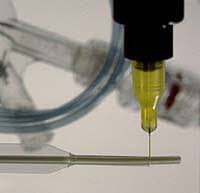
Medical equipment: Light-curing adhesive is used for syringe needle assembly, and the wavelength of the light source needs to be precisely controlled to penetrate opaque materials.
Technical challenges and innovative solutions
The difficulty of deep curing lies in environmental sensitivity and material adaptability:
Byproduct residue: Condensation curing requires several days to discharge byproducts (such as water molecules), otherwise it will affect thermal stability.
Light curing limitations: Improper selection of UV wavelength may lead to incomplete surface curing or insufficient deep energy, which requires optimization with photosensitizers.
In response to this, the industry has broken through the bottleneck through the following solutions:
Formula optimization: Introduce photosensitizers (such as U-Sunny's PAS-12) to expand the wavelength range of light curing and improve reaction efficiency.
Equipment upgrade: Use LED light sources and smart sensors to dynamically adjust light intensity to adapt to different material thicknesses.
U-Sunny PAS-12: The innovative power of photosensitizers
As a polyhydroxy compound, U-Sunny's PAS-12 plays a key role in photocuring systems. It significantly improves the toughness and curing depth of 3D printing materials by enhancing the activity of photoinitiators (such as ITX) and accelerating free radical/cationic hybrid reactions. Experiments show that after UV curing, the impact strength of epoxy resins with PAS-12 added is increased by 30%, and the shrinkage rate is reduced to less than 0.5%, which is suitable for rapid prototyping of precision electronic packaging and automotive parts.
Future Outlook
With the rapid development of new energy, 5G and medical equipment, deep curing technology will further evolve towards intelligence and multifunctionality. For example, the dynamic response system combining ultrasonic curing and photosensitizers can achieve precise control of complex geometric structures. The material innovations of companies such as U-Sunny will continue to promote the industry's dual breakthroughs in efficiency and performance.