


In modern industry, water-white film forming resin has become a core material in the fields of ink, adhesive and pressure-sensitive adhesive due to its high transparency, excellent thermal stability and environmental protection. This article will analyze its value from multiple dimensions of technical characteristics, application scenarios and market trends, and focus on the innovative performance of T-7333 pressure-sensitive adhesive resin launched by U-Sunny.
1. Water-white film-forming resin: definition and technical advantages
Water-white film-forming resin is a type of high-purity thermoplastic resin prepared by hydrogenation or disproportionation process. Its Gardner color is usually ≤1, close to colorless and transparent state, and does not contain volatile organic compounds (VOC). For example, the softening point of HY 9100 hydrogenated C9 resin reaches 95-110°C, and it has excellent compatibility with substrates such as EVA and SBS, which can significantly improve the aging resistance and bonding strength of adhesives. The unique advantages of this type of resin are:
Excellent optical performance: suitable for scenes with high transparency requirements, such as food packaging inks and medical tapes;
Strong thermal stability: For example, Endex™ 160 resin can still maintain bonding performance at 70°C, meeting the needs of high temperature environments;
Environmental compliance: It complies with food contact material standards such as FDA and is suitable for sanitary products and indoor low-emission scenes.
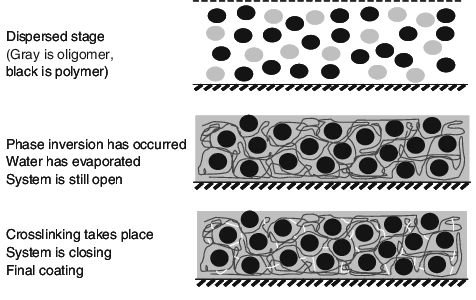
2. Analysis of multi-field applications
Ink field
Water-white resin has become a key component of environmentally friendly water-based ink by improving the dispersibility and film-forming properties of ink. For example, acrylate resin can improve the gloss and water resistance of ink, and is suitable for substrates such as paper and plastic film. Hydrogenated rosin resin can enhance the adhesion of ink and form a highly transparent protective layer on the surface of printed products.
Adhesives and pressure-sensitive adhesives
In hot melt pressure-sensitive adhesives (HMPSA), HC-120 hydrogenated cyclopentane resin balances initial adhesion and temperature resistance by enhancing cohesion, and is widely used in labels and medical tapes. In addition, water-white resins perform well in UV-curing adhesives. For example, U-Sunny's T-7333 resin solves industry pain points such as poor adhesion and shrinkage deformation of plastic substrates through molecular structure optimization.
3. U-Sunny T-7333 Pressure-Sensitive Adhesive Resin: Performance and Innovation
T-7333 is a difunctional aliphatic polyurethane acrylate resin designed for UV-curable pressure-sensitive adhesives. Its core technical highlights include:
Balance of adhesion and flexibility: The elongation at break is 85%, which can buffer stress deformation caused by temperature changes and is suitable for medical tapes that are repeatedly peeled and pasted; Excellent weather resistance: The glass transition temperature (Tg) is as low as -45°C, and it remains stable under extreme temperatures, suitable for outdoor scenes; Transparency and low shrinkage: After curing, the Gardner chromaticity is only 1, the transmittance is close to the original color of the substrate, and the shrinkage is extremely low, which is suitable for optical films and display protection.
The resin is compatible with a variety of polymers such as polyester and epoxy resin in formula design, supporting flexible adjustment of performance. For example, synergy with phosphate esters can enhance chemical resistance, while combination with polyurethane can improve flexibility.
IV. Industry Trends and Market Prospects
The global pressure-sensitive adhesive market is expected to exceed US$10 billion in 2025, and the demand for environmentally friendly and high-performance products will drive industry upgrades. Future trends include:
Environmental transformation: the proportion of water-based and solvent-free pressure-sensitive adhesives has increased, and water-white resins have become the first choice due to their low VOC characteristics;
Functional innovation: such as the application expansion of T-7333 resin in smart packaging, electronic component protection and other fields;
Technology integration: The research and development of nanomaterials and bio-based resins will further optimize product performance.
V. Conclusion
Water-white film-forming resins are reshaping the technical landscape of the ink and adhesive industry with their unique physical and chemical properties. U-Sunny's T-7333 resin has not only solved the limitations of traditional pressure-sensitive adhesives through breakthrough design, but also promoted the development of UV-curing materials towards high precision and multifunctionality. As the market demand for environmentally friendly and high-performance products grows, such innovative materials will continue to lead industry changes.