


N-Vinylcaprolactam
Vinyl-based UV monomers polymerize under UV exposure to form a strong three-dimensional network structure, resulting in a hardened coating or adhesive. This product can be attached to plastic. The curing method is cation/radical hybrid system curing. The product has fast curing speed, which can significantly improve production efficiency and reduce production cycle. And it is a low-VOC material, which can effectively reduce the emission of volatile organic compounds.
N-vinyl caprolactam can be used as an additive in water-based coatings to help improve the viscosity and stability of the coating. It also improves paint dispersion and adhesion. In adhesive manufacturing, NVCL can be used as a modifier to improve the viscosity and adhesion properties of the adhesive. This makes the adhesive more suitable for bonding a variety of materials.
|
Type model |
Viscosity Cps (at 25℃) |
Molecular Formula |
Molecular weight g/mol |
Proportion g/ml, at 25℃ |
Melting point ℃ |
|
|
VM-3530 |
Solid |
C8H13NO |
139 |
1.01 |
34 |
|

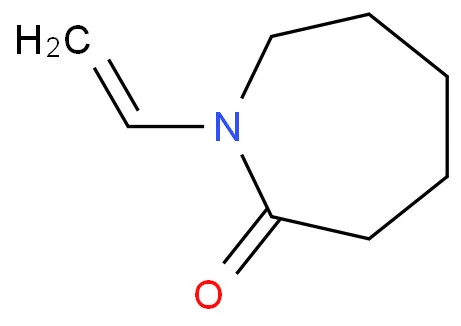
N-vinylcaprolactam
F&Q
F: What are the other characteristics of vinyl ether monomers?
Q: Vinyl ether monomer has the advantages of non-toxic, odorless, no induction period, no oxygen interference, fast curing speed and complete curing. In addition, its polymerization rate is very fast, much higher than that of epoxy monomers. Compared with the epoxy cationic polymerization system, it also has the advantages of low viscosity, easy construction, complete curing, and little impact on humidity and temperature.


